GEOTECHNICAL ENGINEERING
QUEBEC CITY
HomeGround improvementVibrocompaction design

Vibrocompaction Design in Quebec City: Granular Soils & Seismic Compliance

Evidence-based design. Reliable delivery.

LEARN MORE

The St. Lawrence Lowlands didn't just give Quebec City its dramatic cliffs—it left behind thick deposits of loose, saturated silty sands across the Sainte-Foy plateau and parts of the Limoilou flats. When you're dealing with these compressible soils and a 5% probability of exceedance in 50 years per NBCC 2020 for seismic design, vibrocompaction design stops being a routine checklist item and becomes a critical mitigation strategy. Our team has worked on densification plans for sites within a kilometer of the river, where the water table sits barely 1.5 meters down in spring. We combine in-situ testing with numerical settlement analysis to target a relative density over 70%, which is often the threshold for acceptable post-liquefaction settlement in the Charlevoix seismic zone. Getting the vibrator energy and probe spacing right before mobilization saves weeks of rework.

In Quebec City's seismic environment, skipping pre- and post-CPT verification turns vibrocompaction design into guesswork—and guesswork fails at the building permit stage.
Our service areas

Our approach and scope

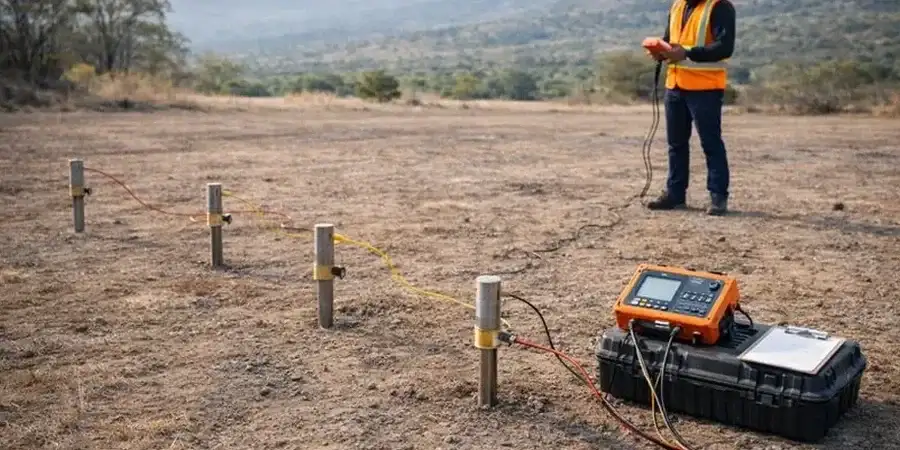
A project on the sandy terraces of Cap-Rouge behaves nothing like one in the old port infill of the Bassin Louise district. In Cap-Rouge, you'll often find clean medium sand extending 12 meters deep—ideal for depth vibrators. Down in the port, we're contending with a mix of silty sand, rubble, and old timber cribbing that can deflect probes and scatter compaction energy. That's where a CPT test becomes non-negotiable; it gives us a continuous profile of tip resistance and sleeve friction, revealing thin silt lenses that a standard SPT spoon would miss. Our design approach adjusts triangular versus square grid spacing based on these profiles, sometimes tightening to 1.8 m centers near buried infrastructure to guarantee uniform densification without heave damage to adjacent foundations.
Vibrocompaction Design in Quebec City: Granular Soils & Seismic Compliance
Technical reference — Quebec City

Site-specific factors

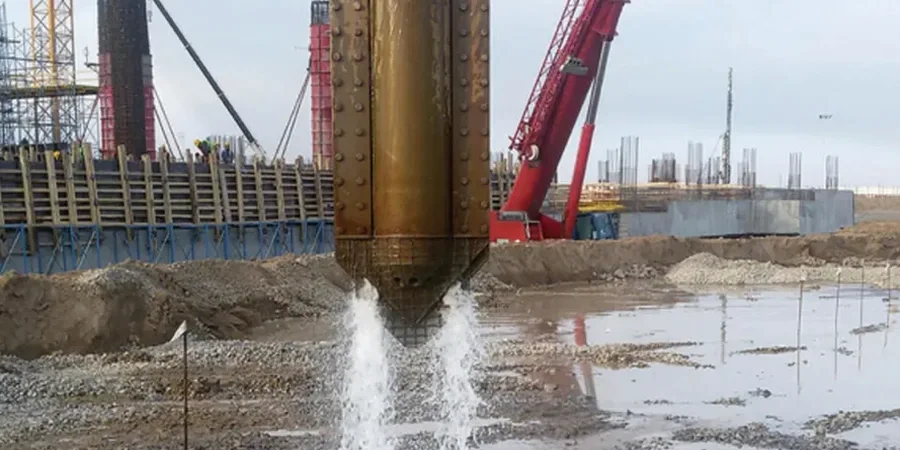
An electric V23 or V32 depth vibrator with a 180 kW power pack doesn't just shake the ground—it sends 1800 to 2200 RPM into the soil column, and in Quebec City's mixed fills, that energy can find a path of least resistance straight into a 100-year-old stone foundation next door. We've had to install vibration monitoring on adjacent heritage buildings in Vieux-Québec, setting a 2 mm/s peak particle velocity alarm threshold to protect mortar joints. The bigger risk is “under-compaction”: stopping the vibrator too early in a layer with elevated silt content, which leaves pockets of loose sand that will settle differentially during a design earthquake. That's why our specs mandate real-time ammeter logs and refusal criteria based on achieved cone resistance, not just time in the ground.

Need a geotechnical assessment?

Reply within 24h.

Email: info@geotechnical-engineering.org

Applicable standards

NBCC 2020 Division B Part 4 (Seismic Design), CSA A23.3-19 (Design of Concrete Structures), ASTM D6066-11 (Standard Practice for Determining the Normalized Penetration Resistance of Sands for Evaluation of Liquefaction Potential), BNQ 2501-092 (Geotechnical Site Investigation)

Reference parameters

ParameterTypical value
Design StandardCSA A23.3, NBCC 2020 seismic provisions
Target Relative Density (Dr)>70% for liquefiable sands
Typical Probe Spacing1.8 m to 2.5 m triangular grid
Effective Depth RangeUp to 20 m with electric vibrators
Pre/Post VerificationCPT tip resistance increase (qc)
Vibrator Power130 kW to 180 kW electric units
Settlement ReductionTarget <25 mm differential post-construction

Quick answers

What does vibrocompaction design cost for a typical Quebec City lot?

For a standalone vibrocompaction design package covering a standard commercial lot in the Sainte-Foy area, fees typically range from CA$1,900 to CA$6,730. The spread depends on the number of CPT verification points, the complexity of the seismic analysis required by the NBCC, and whether vibration monitoring plans for adjacent structures are needed.

How do you verify that the sand is actually densified after treatment?

We run pre- and post-treatment CPT soundings at the exact same locations. The increase in normalized cone resistance (qc1Ncs) is the primary acceptance criterion. We also look at the reduction in friction ratio to confirm that fines haven't migrated and clogged the soil matrix during vibration.

Can vibrocompaction be used next to heritage buildings in Old Quebec?

Yes, but with strict controls. We design the sequence to start farthest from the building and move inward, using vibration monitoring with real-time alarms. Peak particle velocity is kept under 2 mm/s at the foundation, and we often pre-drill a trench to cut off surface wave transmission.

What's the difference between vibrocompaction and stone columns?

Vibrocompaction densifies the existing granular soil in place without adding material—it's a pure settlement and liquefaction mitigation technique for sands with less than 10-15% fines. Stone columns add gravel to reinforce the ground and are used when silt or clay content is too high for simple densification to work.

What depth of loose sand can you treat in Quebec City?

With our electric vibrators, we can effectively treat down to 20 meters. In the deep alluvial deposits along the St. Lawrence, that covers the most critical liquefiable layer. If loose sand extends deeper, we'll sometimes combine vibrocompaction with a bottom-feed stone column program for the deeper zone.

Location and service area

We serve projects in Quebec City and surrounding areas. More info.

View larger map