GEOTECHNICAL ENGINEERING
QUEBEC CITY
HomeFoundationsShallow foundation design

Shallow Foundation Design in Quebec City — Geotechnical Engineering for Local Soils

Evidence-based design. Reliable delivery.

LEARN MORE

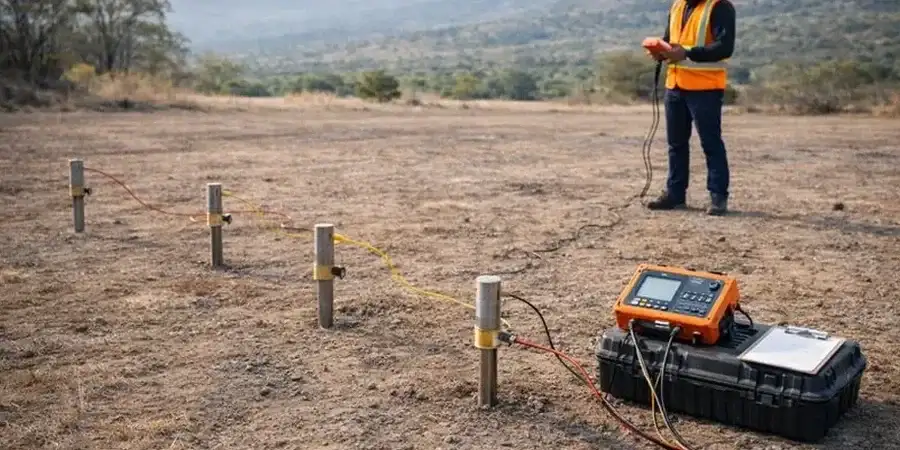
Quebec City's geological foundation rests heavily on the legacy of the Champlain Sea, which left behind thick deposits of sensitive marine clays across much of the Saint Lawrence lowlands. Designing shallow foundations here means confronting low undrained shear strengths — often below 30 kPa — and a frost penetration depth that routinely exceeds 1.5 meters. A standard prescriptive footing will not perform reliably in these conditions without careful geotechnical interpretation. The site investigation must quantify both the intact sensitivity and the remolded strength, because a disturbance during excavation can reduce bearing capacity by an order of magnitude. At depths where refusal is not reached, we often combine in-situ CPT testing with laboratory consolidation tests to calibrate settlement predictions, and when shallow bedrock is suspected within the project footprint, seismic refraction surveys help delineate the rock profile before the excavator ever arrives.

In the Champlain Sea clay, a 25% overestimate of the undrained shear strength will produce a settlement error of more than 40% — precision in the lab is not optional.

Our service areas

Our approach and scope

With a metro population exceeding 800,000 and an average winter low of -17°C, Quebec City imposes a freeze-thaw regime that directly controls minimum embedment depth. The 2015 National Building Code of Canada — adopted in Quebec — mandates that exterior footings bear below the design frost line, but in the silty clay formations common from Sainte-Foy to Charlesbourg, the real challenge is volumetric stability under seasonal moisture fluctuation. We size shallow foundations using the general bearing capacity equation with undrained shear strength profiles derived from field vane tests, applying the correction factor μ per Leroueil's method for the Leda clay. The design integrates a subgrade modulus adjusted for post-cyclic degradation, because even a moderate M5.0 event — the Charlevoix seismic zone sits only 70 km northeast — can trigger excess pore pressure in these normally consolidated deposits. For projects on the upper terrace gravels near the Plains of Abraham, a plate load test provides direct modulus values that reduce conservatism in the structural model by up to 30%.
Shallow Foundation Design in Quebec City — Geotechnical Engineering for Local Soils
Technical reference — Quebec City

Site-specific factors

The seasonal contrast between spring thaw saturation and late-summer drought creates a shrink-swell cycle in the weathered crust that few structural engineers account for. When a shallow footing is placed at 1.2 m without extending past the desiccated zone, differential movement of 15–25 mm between interior and perimeter columns is not unusual after the first winter. In the Saint-Roch and Limoilou districts, where historic fill overlies organic silts, we've measured methane concentrations above 5% LEL during excavation — a secondary hazard that the design must mitigate through passive venting layers beneath the slab. The combination of sensitive clay and a Class C seismic site demands a specific check for bearing capacity loss under cyclic loading, because the Charlevoix source can generate a peak ground acceleration that reduces the factor of safety below 1.5 if the static design does not explicitly incorporate the dynamic shear strength ratio from cyclic triaxial data.

Need a geotechnical assessment?

Reply within 24h.

Email: info@geotechnical-engineering.org

Applicable standards

NBCC 2015 (National Building Code of Canada) — Division B, Part 4, CSA A23.3:2014 — Design of Concrete Structures (footing shear and flexure), ASTM D1586 — Standard Test Method for Standard Penetration Test (SPT), CAN/CSA-S6-14 — Canadian Highway Bridge Design Code (when applicable)

Reference parameters

ParameterTypical value
Minimum footing width (isolated)600 mm (residential), 800 mm (commercial)
Design frost depth (NBCC 2015)1.5 m below finished grade
Typical undrained shear strength (Su)15–60 kPa (intact), <5 kPa (remolded)
Allowable bearing pressure (clay)50–100 kPa (FS=3 on Su)
Seismic hazard (Sa 0.2s, Class C)0.30–0.45g (Charlevoix source zone)
Consolidation settlement triggerStress increase > 20% of preconsolidation pressure

Quick answers

What does a shallow foundation design package typically cost in Quebec City?

For a standard residential or light commercial project in the Quebec City area, a complete shallow foundation design package — including site investigation, bearing capacity calculations, settlement analysis, and stamped construction drawings — generally falls in the range of CA$2.490 to CA$4.400. The final figure depends on the number of boreholes required, the complexity of the soil profile, and whether frost-protected details are needed.

How deep do footings need to be in the Champlain clay zone?

NBCC 2015 requires a minimum of 1.5 m below finished grade for frost protection, but in the sensitive clay deposits of the Saint Lawrence lowlands, the governing depth is often controlled by the thickness of the desiccated crust. We typically target an embedment that places the bearing surface at least 0.3 m into the intact, unweathered clay to avoid the seasonal volumetric changes that affect the upper 1.2–1.8 m.

Can you design shallow foundations on the sensitive clays without deep piles?

Yes, in many cases. If the intact sensitivity is below 8 and the preconsolidation pressure exceeds the design bearing stress by a factor of 1.5, shallow foundations are feasible. We verify this with oedometer tests and field vane profiles, and we specify an excavation procedure that limits disturbance — typically a final 150 mm of trimming by hand before the mud mat is poured.

What seismic checks apply to footings in the Charlevoix seismic zone?

The Charlevoix seismic zone is the most active in eastern Canada, and NBCC 2015 assigns a short-period spectral acceleration (Sa 0.2s) between 0.30 and 0.45g for Quebec City on Site Class C. Our designs include a bearing capacity reduction under cyclic loading, a sliding stability check at the footing-soil interface using the dynamic base shear from the modal analysis, and a liquefaction assessment for any granular lenses within the foundation influence zone.

Location and service area

We serve projects in Quebec City and surrounding areas.

View larger map