GEOTECHNICAL ENGINEERING
QUEBEC CITY
HomeLaboratoryGrain size analysis (sieve + hydrometer)

Grain Size Analysis (Sieve + Hydrometer) in Quebec City

Evidence-based design. Reliable delivery.

LEARN MORE

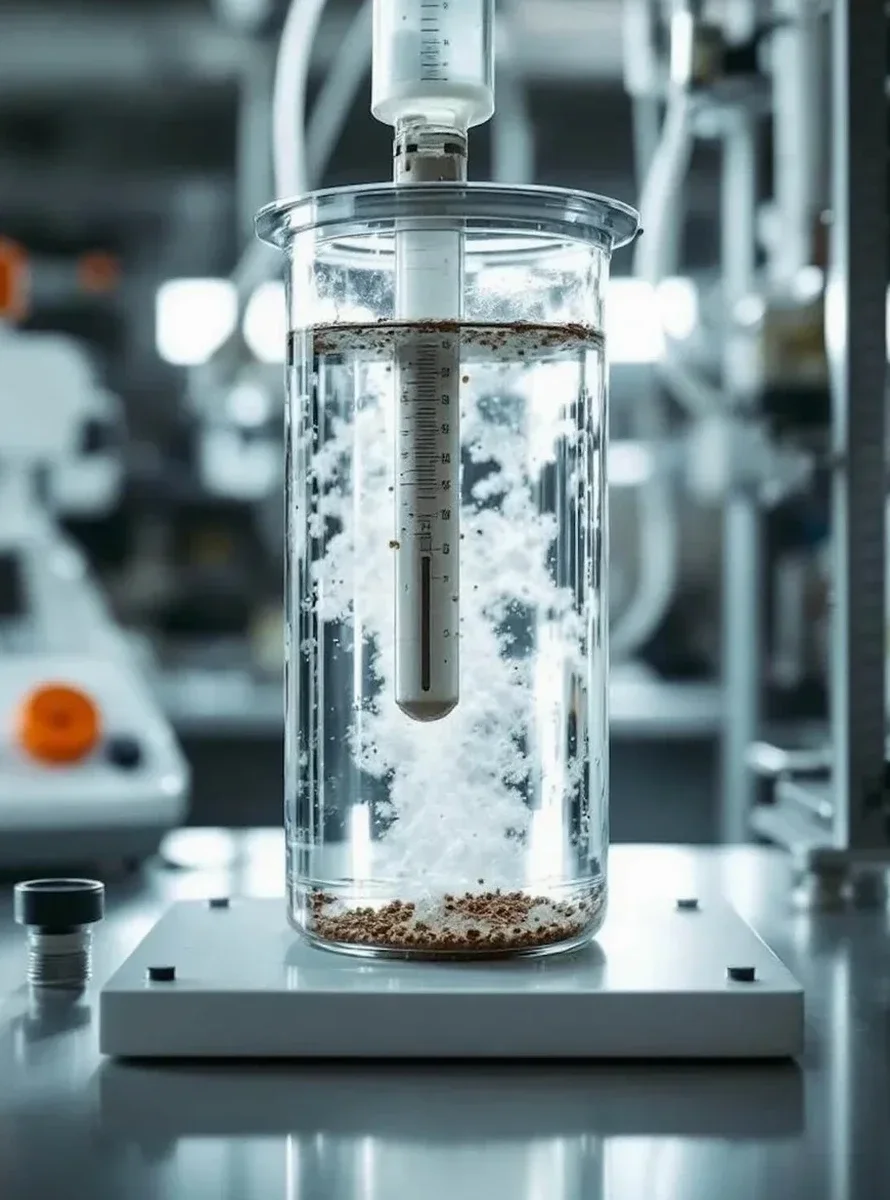
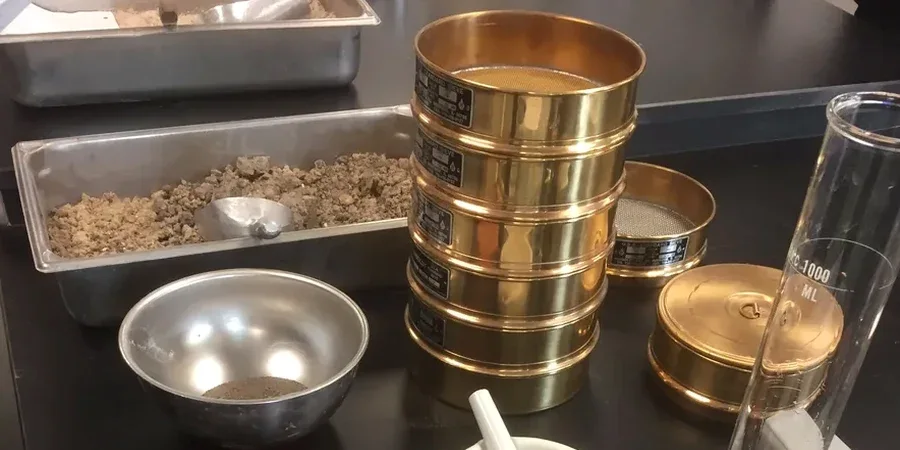
Skipping the full hydrometer curve on a silty till in Sainte-Foy is the fastest way to misclassify a frost-susceptible soil. Quebec City sits on a complex glacial and post-glacial stratigraphy where the fraction passing the No. 200 sieve dictates everything from subgrade stiffness to foundation drainage. Our grain size analysis runs the complete stack—mechanical sieves for the coarse fraction and a calibrated hydrometer for the fines—so the design team knows the exact D10, D30, and D60 values before the first footing is poured. When the borehole log from a CPT test shows a silt-clay transition, the hydrometer data confirms whether the material is a low-plasticity silt (ML) or a sensitive Champlain Sea clay that loses strength when remolded. Contractors working near the Saint-Charles River floodplain rely on this paired dataset to meet the CSA A23.3 aggregate gradation requirements and the NBCC frost-protection depth of 1.5 m.

In Quebec City’s post-glacial soils, the difference between a silt and a clay is the difference between a frost-stable subgrade and a spring thaw failure.
Our service areas

Our approach and scope

A recent six-storey residential project in Limoilou hit a metre-thick layer of varved clay directly above a dense till. The structural consultant needed both the coarse-fraction gradation for the till’s bearing capacity and the hydrometer curve for the clay’s consolidation settlement. We ran a full ASTM D6913/D7928 protocol on every split spoon sample from the SPT drilling campaign, producing a continuous grain-size envelope across the site. The lab’s ISO 17025-accredited procedure includes wet sieving through a 75 µm mesh, deflocculation with sodium hexametaphosphate, and temperature-corrected hydrometer readings at 0.5, 1, 2, 5, 15, 30, 60, 240, and 1440 minutes. The resulting report flags the clay fraction (<2 µm) separately from the silt fraction, which is critical when the Quebec Ministry of Transport requires a sand equivalent or methylene blue value on the fine portion. For contractors placing structural fill in the Lebourgneuf industrial park, the gradation curve doubles as a quality-control record that proves the imported granular meets the spec before compaction testing begins.
Grain Size Analysis (Sieve + Hydrometer) in Quebec City
Technical reference — Quebec City

Site-specific factors

Quebec City recorded a frost depth of 1.5 m in the 2020 National Building Code cycle, and the Champlain Sea clay belt that underlies much of the central plateau contains silt lenses that heave dramatically when the gradation leans toward the 10–50 µm range. A grain size curve that skips the hydrometer step will mislabel a frost-susceptible silt as a clay and expose shallow footings to differential heave. The same dataset matters for seismic liquefaction screening: Seed & Idriss’s simplified procedure uses the fines content and D50 to adjust the cyclic resistance ratio. In the Charlevoix seismic zone, where the 1925 magnitude-6.2 event caused widespread sand blows, a defensible gradation analysis is the first line of evidence for a liquefaction exemption. Overlooking the full curve also triggers compliance gaps with the CSA A23.3 durability requirements for concrete aggregate exposed to freeze-thaw cycles.

Need a geotechnical assessment?

Reply within 24h.

Email: info@geotechnical-engineering.org

Explanatory video

Applicable standards

ASTM D6913-04 (2017) – Standard Test Methods for Particle-Size Distribution of Soils, ASTM D7928-21 – Standard Test Method for Particle-Size Distribution of Fine-Grained Soils Using the Sedimentation Method, CSA A23.2-2A – Sieve Analysis of Fine and Coarse Aggregate, BNQ 2501-025 – Sols – Analyse granulométrique, NBCC 2020 – Frost protection and soil classification requirements

Reference parameters

ParameterTypical value
Sieve range (coarse)100 mm down to 75 µm (No. 200)
Hydrometer range (fines)75 µm down to 0.5 µm (clay fraction)
Standard referenceASTM D6913 / D7928, CSA A23.2-2A
Dispersion agentSodium hexametaphosphate (40 g/L)
Hydrometer modelType 152H, calibrated at 20 °C
Minimum sample mass200 g for fine soils; 5 kg for granular
Reported coefficientsCu, Cc, percent gravel/sand/silt/clay

Quick answers

When is a hydrometer analysis required instead of just a sieve test?

Any soil with more than 12 percent passing the No. 200 sieve needs a hydrometer to separate the silt and clay fractions. In Quebec City’s Champlain Sea deposits, the fines content routinely exceeds 40 percent, so the hydrometer is standard on every investigation below 1.5 m depth.

How long does a combined sieve and hydrometer test take?

The wet sieving and hydrometer sedimentation run over a minimum of 24 hours. We typically deliver the final PDF report within three business days of sample reception at the Quebec City lab.

What does a grain size analysis cost in Quebec City?

A combined sieve-plus-hydrometer test ranges from CA$130 to CA$280 per sample, depending on whether the sample needs pre-treatment for organic content or carbonates. A standard mechanical sieve-only analysis on granular material falls at the lower end of that range.

Can the grain size curve help identify frost-susceptible soils?

Yes. The USACE frost-susceptibility criteria use the percent finer than 0.02 mm. Our reports include that value explicitly so the geotechnical engineer can classify the material as F1 through F4 per the MTQ classification, which directly influences the required insulation or sub-excavation depth.

Do you need a full grain size analysis for concrete aggregate approval?

Yes. CSA A23.1 requires a combined gradation on the coarse and fine aggregate fractions, plus the fineness modulus. We run the full CSA A23.2-2A procedure and flag any gap-graded or excessively fine material before it reaches the batch plant.

Location and service area

We serve projects in Quebec City and surrounding areas.

View larger map