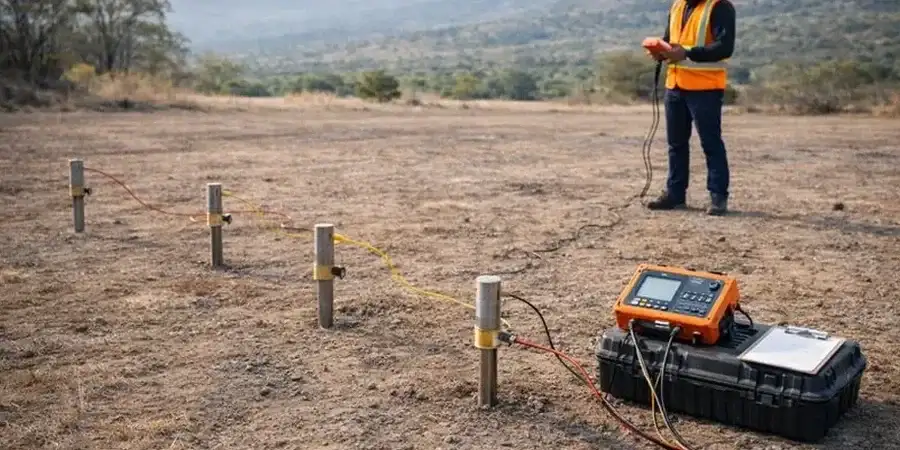
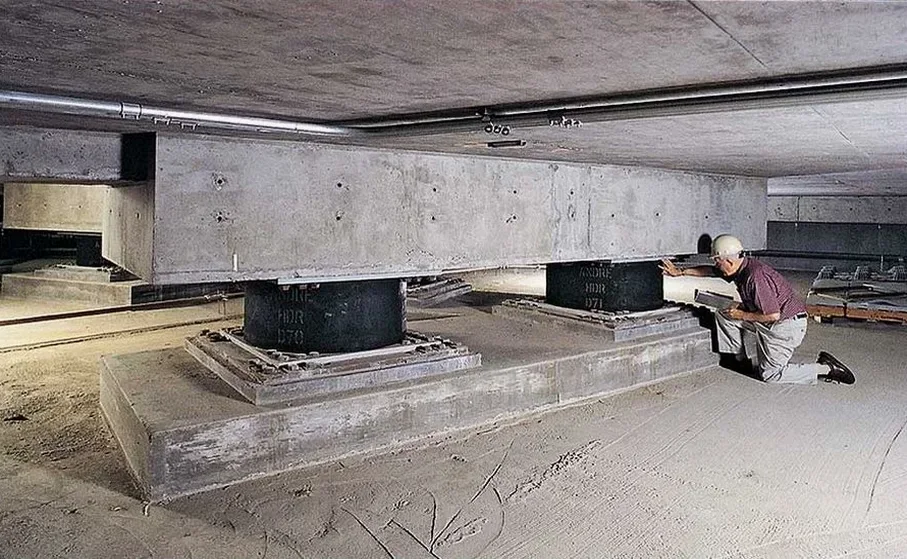
Quebec City sits on a geological knife edge — the ancient Canadian Shield meets the seismically active Charlevoix zone, one of the most concentrated earthquake hotspots in eastern North America. The 1925 Charlevoix-Kamouraska magnitude 6.2 event and the 1663 magnitude 7+ quake are not distant history; they shape every design decision we make today. In a city where heritage masonry from the 17th century coexists with modern institutional buildings, base isolation seismic design becomes more than a structural choice — it is a necessity for resilience. Our technical team applies the National Building Code of Canada (NBCC 2020) site-specific spectra, using site class C and D profiles common along the Saint Lawrence River to calibrate isolation systems. When we combine these ground motion demands with the high-frequency content typical of eastern Canadian bedrock, the isolation design must account for significant spectral acceleration at short periods. For sites near the port or in Limoilou, where soft post-glacial clays amplify long-period motion, we often recommend complementing the design with a seismic microzonation study to capture basin-edge effects before finalizing isolator properties.
In the Charlevoix seismic zone, a well-calibrated isolation system doesn't just reduce drift — it can mean the difference between a heritage stone wall surviving the next magnitude 6 event or not.