GEOTECHNICAL ENGINEERING
QUEBEC CITY
HomeInvestigationSPT (Standard Penetration Test)

SPT Testing in Quebec City: Subsurface Data for Informed Foundation Design

Evidence-based design. Reliable delivery.

LEARN MORE

A common oversight in Quebec City construction projects is assuming uniform soil conditions across a site. The reality of the St. Lawrence Lowlands is far more complex, with discontinuous lenses of soft marine clay, dense glacial till, and fractured shale bedrock often coexisting within a single property. Making foundation decisions without localized SPT data leads to costly post-excavation redesigns when unexpected weak zones appear. The Standard Penetration Test provides quantitative N-values that correlate directly with the bearing capacity and settlement potential of these heterogeneous Quaternary deposits. Our accredited laboratory processes the recovered split-spoon samples to classify strata according to the Canadian Foundation Engineering Manual, giving structural engineers in the Capitale-Nationale region the parameters required for NBCC-compliant designs. We have seen projects near the Plains of Abraham where a single poorly executed borehole missed a critical clay lens, resulting in differential settlement that required micropile retrofitting.

SPT N-values in Quebec City's Champlain clay can drop below 2, requiring careful interpretation of undrained strength ratios for safe footing design.
Our service areas

Our approach and scope

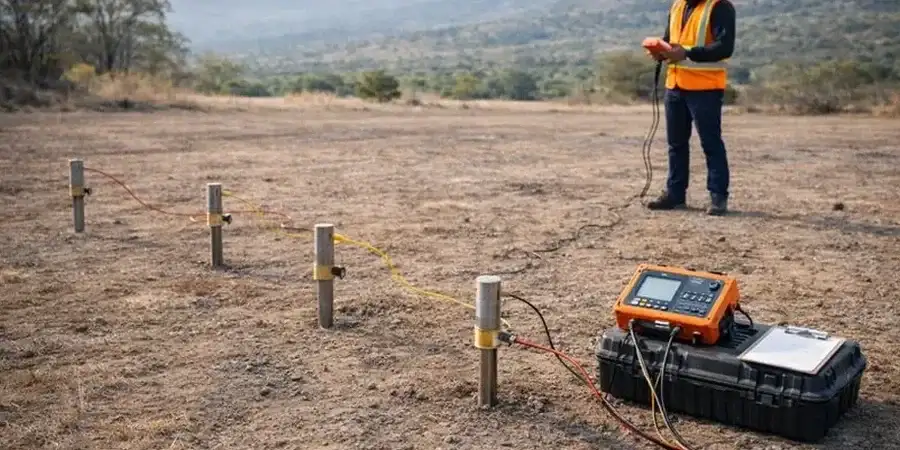
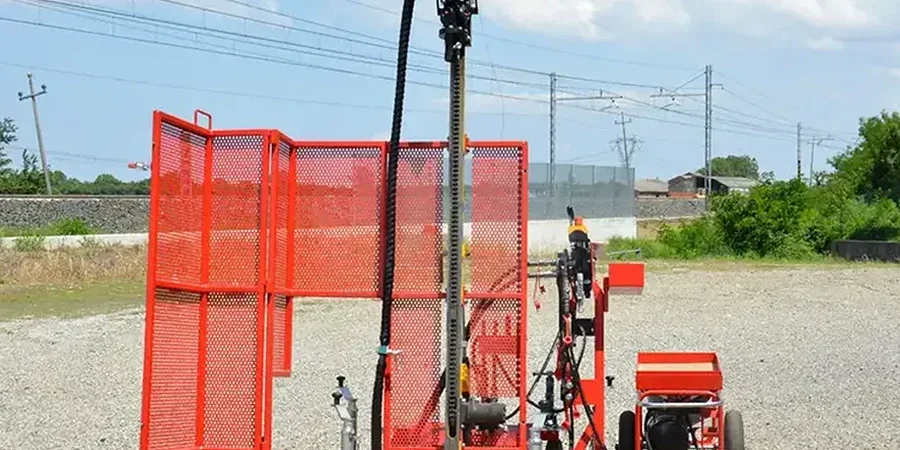
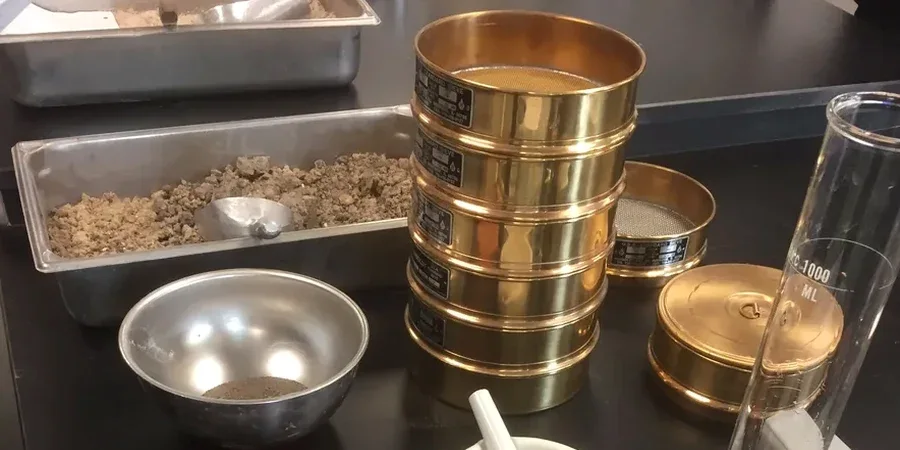
The field setup in Quebec City typically involves a track-mounted CME-75 drill rig capable of accessing constrained urban sites in neighbourhoods like Saint-Roch or Montcalm without excessive surface disruption. The standardized procedure follows ASTM D1586, using a 140-pound hammer dropping 30 inches to drive a 2-inch split-spoon sampler 18 inches into the subsoil. What distinguishes our approach is the real-time logging of drilling resistance and groundwater strikes, which are critical when penetrating the sensitive Champlain Sea clays that can lose up to 90% of their undrained shear strength when disturbed. The crew records blow counts for each 6-inch increment, immediately flagging any refusal layers above the 50-blow threshold that indicate dense till or bedrock. Complementing the penetration data, disturbed samples are sealed in airtight containers for subsequent grain size analysis and Atterberg limits testing, establishing the full Unified Soil Classification System designation for each stratum encountered above the Precambrian basement.
SPT Testing in Quebec City: Subsurface Data for Informed Foundation Design
Technical reference — Quebec City

Site-specific factors

In Quebec City, we frequently observe that contractors underestimate the depth of the stiff crust overlying the soft Champlain Sea silts. A drill hole terminated at 3 metres may return N-values above 15, suggesting competent ground, while the sensitive clay lurking at 5 metres below grade remains undetected. This stratigraphic trap has caused bearing capacity failures in lightly loaded structures where the crust is punctured during excavation. The risk is amplified on sloping sites along the Cap Diamant escarpment, where pore pressure regimes change seasonally due to spring snowmelt infiltration. A properly logged SPT profile identifies the crust thickness and the transition to the soft marine unit, allowing the geotechnical engineer to specify a compensated foundation or preloading program before construction begins.

Need a geotechnical assessment?

Reply within 24h.

Email: info@geotechnical-engineering.org

Applicable standards

NBCC 2020 Part 4 (Structural Design), CSA A23.3-19 (Design of Concrete Structures), ASTM D1586-18 (Standard Test Method for SPT and Split-Barrel Sampling), Canadian Foundation Engineering Manual (CFEM 4th Edition)

Reference parameters

ParameterTypical value
Hammer typeSafety hammer with auto-trip (calibrated to 60% energy)
Sampler dimensionsStandard 2" OD split spoon, 18" length
Borehole diameter6" to 8" (150-200 mm) hollow-stem auger
Test intervalEvery 1.5 m or at lithological change
Energy correctionN60 values reported per Seed & Idriss method
Sample recoveryPercentage logged; disturbed samples for lab classification
Groundwater observationStabilized level recorded after 24 hours

Quick answers

What does an SPT test cost for a residential project in the Quebec City area?

For a typical single-family home lot investigation requiring one or two boreholes to a depth of 8 to 10 metres, the budget range falls between CA$830 and CA$1.040 per borehole, which includes the drilling crew, SPT execution, sample recovery, and the geotechnical report with foundation recommendations.

How deep should SPT boreholes go for a foundation on marine clay?

Borehole depth depends on the footing width and the thickness of the compressible layer. In the Champlain Sea deposits of Quebec City, we generally extend drilling to at least twice the estimated stress influence depth of the footing, or until refusal in the underlying glacial till or bedrock. A minimum depth of 10 metres is common, with deeper holes required for embankment loads or sensitive clays.

Is SPT reporting compliant with Quebec's building code?

Yes. Our reports follow the requirements of the Quebec Construction Code (Chapter I, Building) which adopts the NBCC. We provide N60 values, stratigraphic logs, groundwater data, and foundation design parameters that satisfy Part 4 of the code and the guidelines of the CFEM.

Can SPT data be used to assess liquefaction risk in Quebec City?

Absolutely. The NBCC assigns a seismic hazard value of Sa(0.2) = 0.40g for Quebec City. Our SPT N60 data, combined with grain size analysis, feeds into the simplified Seed-Idriss procedure to calculate the factor of safety against liquefaction in loose, saturated sandy layers that may exist beneath the clay crust.

Location and service area

We serve projects in Quebec City and surrounding areas.

View larger map