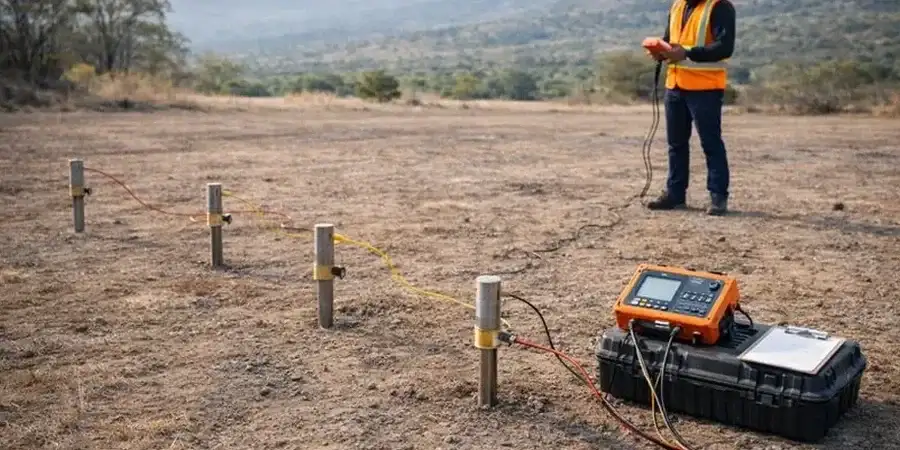
Quebec City sits atop a complex geology carved by the Champlain Sea and the Laurentide Ice Sheet, where the St. Lawrence River meets the Canadian Shield at just 46.8 degrees north. The local bedrock, primarily Ordovician shale and limestone, is riddled with fractures that control groundwater movement, while the overlying glacial till and sensitive marine clays present a radically different permeability profile. A field permeability test, whether the Lefranc method in soil or the Lugeon test in rock, becomes indispensable when designing dewatering systems or assessing dam foundations in this UNESCO-listed landscape. The team applies these in situ techniques to measure hydraulic conductivity directly where the water flows, avoiding the disturbance that remolding brings to lab samples. For deeper investigations into the stratigraphy before installing piezometers, the crew often runs a CPT test to map the transition from Champlain Sea silts into the underlying till, which feeds directly into the Lugeon test interval selection within the fractured caprock.
In Quebec City's fractured limestone, a Lugeon value above 20 LU often signals that systematic grouting is needed before any underground excavation begins.