GEOTECHNICAL ENGINEERING
QUEBEC CITY
HomeFoundationsPile foundation design

Pile Foundation Design in Quebec City: Navigating Post-Glacial Soils and Seismic Demands

Evidence-based design. Reliable delivery.

LEARN MORE

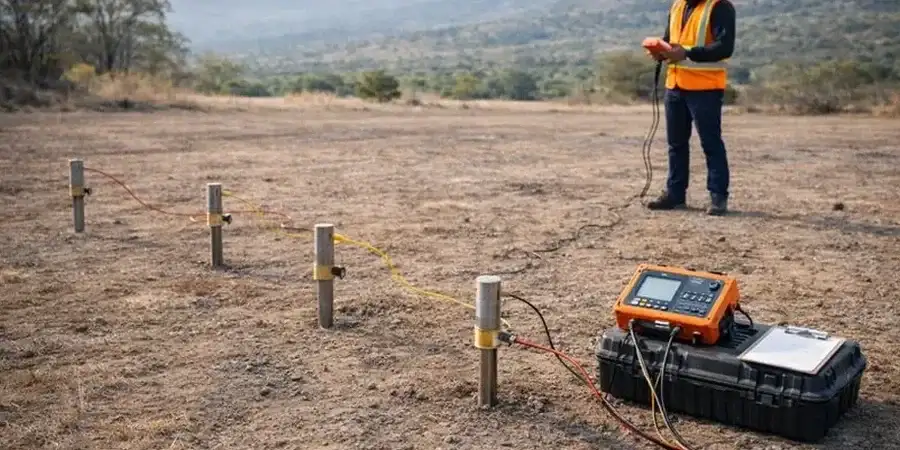
Pile foundation design in Quebec City operates within a regulatory framework shaped by the National Building Code of Canada (NBCC) and CSA A23.3, but the real challenge lies underground. The city rests on a complex stratigraphy of post-glacial Champlain Sea clays, interspersed with glacial till and bedrock at variable depths. This is not uniform terrain — what works near the Plains of Abraham may be entirely inadequate in the Saint-Roch lowlands, where sensitive clays can lose strength dramatically when disturbed. Our technical approach begins with a detailed geotechnical campaign, combining in-situ permeability tests to characterize the silty clay lenses that govern drainage around pile shafts, and then cross-referencing those results with advanced laboratory analysis. Without this integration, even a code-compliant design can fail to anticipate the long-term settlement behavior of these compressible marine deposits.

In Quebec City, the depth to competent bedrock can vary by over 10 meters within a single site — pile design here is never a copy-paste exercise.

Our service areas

Our approach and scope

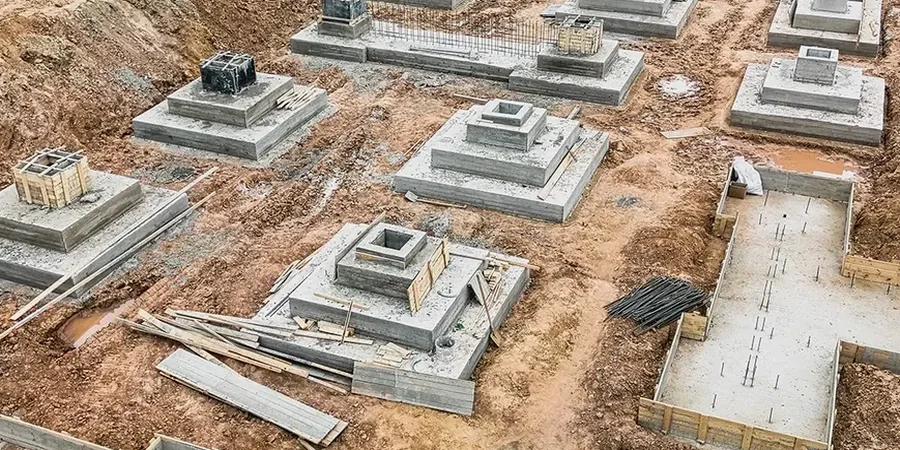
A recurring error we see in regional projects is the specification of driven piles without first confirming the depth to bedrock or the presence of erratic boulders in the till layer — a mistake that leads to pile refusal at shallow depths and costly redesigns mid-construction. Quebec City's glaciated landscape means that bedrock topography can plunge or rise by several meters within a single city block, and isolated boulders are common. To mitigate this, we often pair cone penetration testing with seismic refraction surveys along the proposed pile alignment, which provides a continuous profile of the subsurface stiffness and helps identify zones where pre-drilling or pile tip reinforcement will be necessary. For structures in the lower town, where the marine clay exceeds 30 meters in thickness, the design typically shifts to friction piles with careful evaluation of negative skin friction from consolidating soils, a parameter we quantify through odometer tests on undisturbed Shelby tube samples. The interplay between pile group efficiency, seismic lateral spreading potential, and frost heave protection — which in Quebec City requires pile caps to extend at least 1.8 meters below grade — makes each foundation a bespoke engineering exercise rather than a standard application of bearing capacity formulas.
Pile Foundation Design in Quebec City: Navigating Post-Glacial Soils and Seismic Demands
Technical reference — Quebec City

Site-specific factors

A practical observation from our field team: in the Basse-Ville sector, we frequently encounter a thin sand lens trapped between two clay layers at roughly 8 to 12 meters depth. This layer acts as a confined aquifer, and when a driven pile penetrates it, the resulting hydraulic connection can trigger sudden settlements in adjacent structures within a 30-meter radius. The risk is compounded by the post-earthquake behavior of these sensitive clays — NBCC 2015 and the newer 2020 edition classify much of the St. Lawrence lowlands as susceptible to cyclic softening. A pile group designed purely on static capacity may lose significant skin friction during a design-level seismic event if the clay remolds. Our risk mitigation protocol involves running site-specific ground response analyses and specifying pile spacing that minimizes group interaction in the sensitive upper strata, while also recommending inclinometer monitoring during the driving phase if the site is within 50 meters of existing masonry buildings.

Need a geotechnical assessment?

Reply within 24h.

Email: info@geotechnical-engineering.org

Applicable standards

NBCC 2015/2020 (National Building Code of Canada) — seismic provisions for Quebec City, CSA A23.3 — Design of Concrete Structures, ASTM D1143-20 — Standard Test Methods for Deep Foundation Elements Under Static Axial Compressive Load, CAN/CSA-S6-19 — Canadian Highway Bridge Design Code, Geotechnical Design Manual (MTQ — Ministère des Transports du Québec)

Reference parameters

ParameterTypical value
Typical pile type for Champlain clayDriven friction piles (H-piles or closed-end pipe)
Bedrock depth range (Plains vs. Saint-Roch)3 to 10 m in Upper Town; 25 to 60 m in Lower Town
Frost penetration depth (Quebec City)1.5 to 1.8 m below grade
Seismic site class (NBCC)Site C (very dense soil/soft rock) to Site E (sensitive clay)
Sensitive clay risk zonesChamplain Sea deposits with sensitivity >30 (quick clay potential)
Pile load test acceptance criteriaASTM D1143-20 with Davisson offset limit
Design lateral load resistanceAnalyzed with LPILE or equivalent p-y curve software

Quick answers

What is the typical cost range for a pile foundation design package in Quebec City?

For a standard residential or light commercial project, the geotechnical investigation and pile foundation design package typically ranges from CA$2,320 to CA$7,440, depending on the number of boreholes, the depth of the Champlain Sea clay, and the complexity of the seismic analysis required under NBCC.

How does the sensitive clay in Quebec City affect pile design?

The Champlain Sea clays can have a sensitivity (the ratio of undisturbed to remolded shear strength) exceeding 30, and in some pockets over 100, which classifies them as potentially quick clays. For pile design, this means we must assume that seismic shaking or construction vibrations can remold the clay around the upper pile shaft, eliminating skin friction. Our designs typically de-rate or ignore shaft resistance in the sensitive zone and rely on deeper bearing in competent till or bedrock, or we specify displacement piles that minimize remolding during installation.

Do you perform pile load testing on site in Quebec City?

Yes, we coordinate and interpret both static load tests (following ASTM D1143-20) and high-strain dynamic testing using a Pile Driving Analyzer (PDA). Given the variability of the glacial stratigraphy across the Quebec City region, load testing is often essential to validate the design assumptions, particularly for friction piles in the deep clay deposits of the Saint-Charles River valley.

Location and service area

We serve projects in Quebec City and surrounding areas.

View larger map