GEOTECHNICAL ENGINEERING
QUEBEC CITY

Geotechnical Engineering in Quebec City

Evidence-based design. Reliable delivery.

LEARN MORE

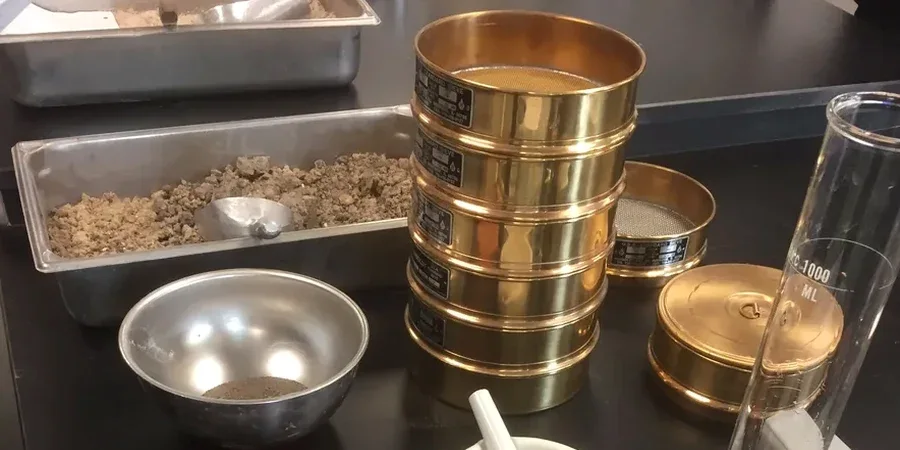
Quebec City's foundation rests on a geological story written by glaciers and the Champlain Sea. The retreat of the Laurentide Ice Sheet left behind a complex stratigraphy of glacial till, raised beaches, and deep deposits of sensitive Leda clay. Modern construction—from Old Quebec restorations to Lebourgneuf expansions—must contend with soils that lose significant strength when disturbed. A soil mechanics study in Quebec City deciphers this legacy to prevent structural settlement and instability. The city's 550,000 residents live atop terrain where the water table often sits less than three meters below grade. Without precise laboratory triaxial testing and consolidation analysis, building on these post-glacial sediments introduces risks that compound during the region's five-month winter freeze. The Saint-Charles River valley adds alluvial complexity that demands a detailed grain-size analysis to distinguish between stable granular lenses and problematic silty matrix soils before any excavation proceeds.

Sensitive Champlain Sea clays can lose over 80% of their undisturbed strength when remolded—a reality that governs every excavation in the Quebec City region.
Geotechnical Engineering in Quebec City
Technical reference — Quebec City

Our service areas

Local geology

Seasonal extremes define geotechnical practice here. The transition from -30°C winters to humid 25°C summers exerts a freeze-thaw cycle that remolds the upper two meters of soil annually. In Sainte-Foy's residential zones, we consistently see frost heave displace shallow footings by 40 to 80 millimeters when silt-rich soils are present. A soil mechanics study in Quebec City must therefore evaluate frost susceptibility using grain-size distribution and Atterberg limits, per CSA guidelines. The nearby Laurentian highlands shed coarse alluvial fans onto the plains, creating abrupt lateral changes in bearing capacity over distances of less than ten meters. Our technicians frequently encounter a crust of desiccated clay overlying normally consolidated sensitive clay—a profile that misleads conventional penetration testing. Integrating consolidation data with undrained shear strength profiles prevents the misclassification that leads to long-term differential settlement under sustained structural loads.

Applicable standards

NBCC 2020 (National Building Code of Canada), CSA A23.3:19 – Design of Concrete Structures, ASTM D4767 – Consolidated Undrained Triaxial Compression Test, CAN/BNQ 2501-135 – Geotechnical Site Investigation, ASTM D2435 – One-Dimensional Consolidation Properties of Soils

Need a geotechnical assessment?

Reply within 24h.

Email: info@geotechnical-engineering.org

Why choose us

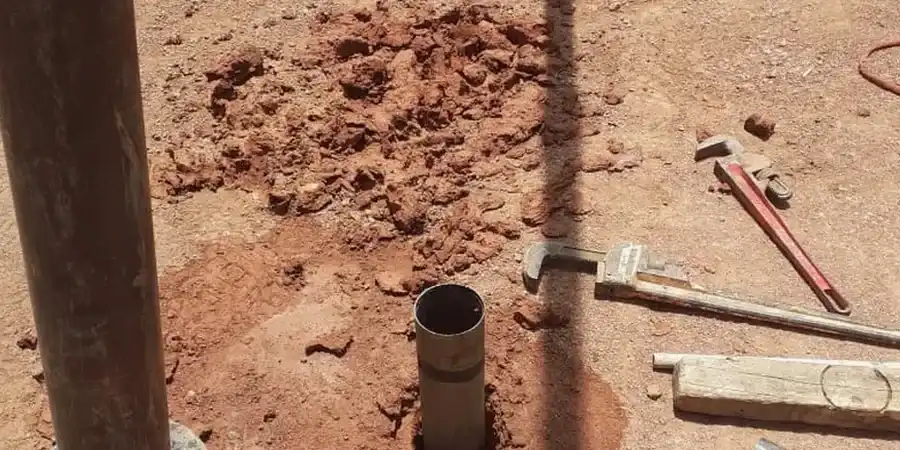
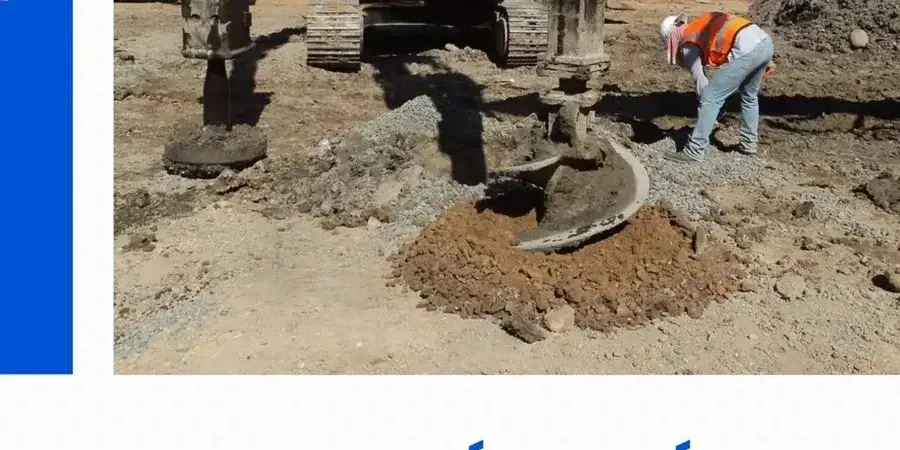
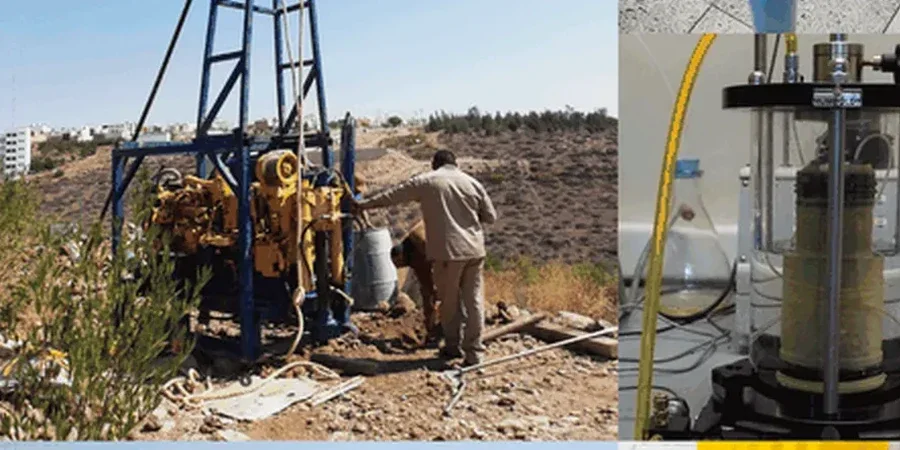
The hydraulic piston sampler extracts a 75-millimeter diameter tube from sensitive clay at a site in Limoilou. The technician monitors recovery ratio closely—anything below 90% indicates disturbance that invalidates strength parameters. In our Quebec City soil mechanics study workflow, field vane testing immediately follows sampling at each depth interval. The remolded strength reading often drops below 10 kPa in the marine clay stratum, signaling a quick clay hazard that requires engineered mitigation. A site near the Saint-Charles River last spring revealed a 12-meter thick sensitive clay layer with salinity below two grams per liter. The excavation plan shifted from open-cut to a supported system with 45-degree slope flattening and immediate shotcrete application. These decisions happen on site, guided by real-time field data and an understanding that Champlain Sea deposits behave more like viscous fluids than solids once their structure breaks down.

Reference parameters

ParameterTypical value
Sensitive Clay IdentificationLeda/Champlain Sea deposit analysis
Frost Susceptibility ClassificationUSCS-based with local frost penetration data
Consolidation TestingOedometer per ASTM D2435
Undrained Shear StrengthField vane and UU triaxial
Seismic Site ClassNBCC 2020, Section 4.1.8.4
Settlement AnalysisImmediate and consolidation settlement calculations
Deep Foundation CapacityEnd bearing in till or bedrock

Quick answers

What makes Quebec City's soils unique from a geotechnical perspective?

The Champlain Sea inundated the region after the last glaciation, depositing thick sequences of silty clay now known as Leda clay. These deposits are 'sensitive'—their undisturbed strength can be high, but remolding turns them into a liquid-like material. A soil mechanics study here focuses heavily on identifying and quantifying this sensitivity to prevent catastrophic flow slides during construction.

How does frost action influence foundation design in the Quebec City area?

Frost penetrates up to 1.8 meters in exposed silts during a typical winter. Ice lens formation heaves shallow footings differentially, cracking masonry and concrete. Our soil mechanics study determines frost susceptibility through grain-size analysis, and we specify foundation depths below the local frost line or incorporate rigid insulation layers to intercept the freezing front.

What is the typical cost range for a comprehensive soil mechanics study?

A complete soil mechanics study for a residential or light commercial project in Quebec City generally ranges from CA$4,120 to CA$6,160. The final cost depends on the number of boreholes, depth of investigation, and the laboratory testing program required to characterize the sensitive clay and till layers on your specific lot.

Is seismic analysis required for standard projects in Quebec City?

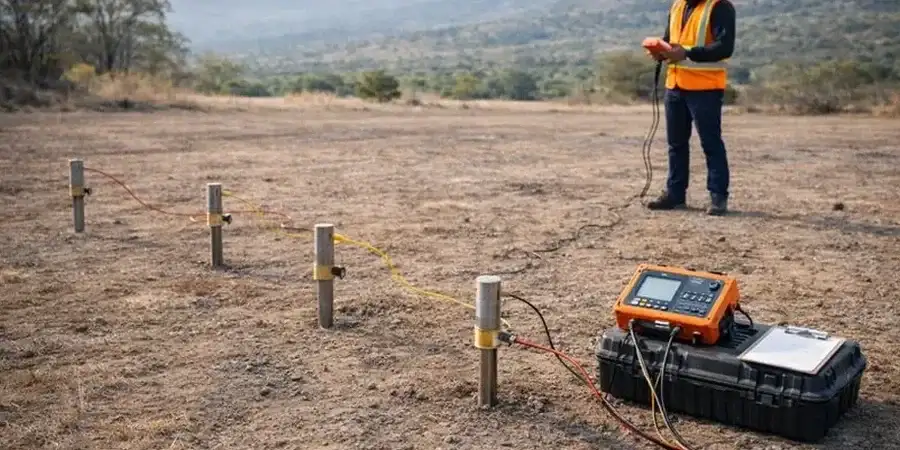
Yes. Quebec City sits in a moderately active seismic zone, and the NBCC 2020 requires site-specific soil classification to determine the seismic design spectrum. Soft clay sites can amplify ground motion significantly. Our soil mechanics study includes shear wave velocity measurement or correlation with undrained shear strength to assign the correct Site Class, directly impacting structural design forces.

Location and service area

We serve projects in Quebec City and surrounding areas.

View larger map